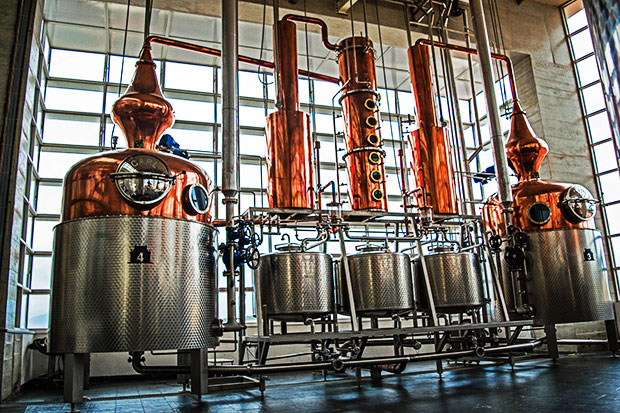
Distilleries are used to produce alcoholic beverages such as whisky, rum, brandy, and vodka. The process of producing these spirits begins with the fermentation of a liquid, usually a grain mash/wort, to create a low-alcohol liquid called wash or distiller’s beer (7% – 10% ABV before it is put into a still). Then, the wash is heated in the still, which separates the alcohol from the other components of the wash through the process of distillation.
During distillation, the wash is heated until the alcohol vaporizes and rises to the top of the still. The vapor is then condensed back into a liquid and collected. This liquid, called the distillate, is typically around 70% alcohol. It is then aged in oak barrels, which can impart flavor and color to the final product.
After aging, the distillate is typically diluted with water to reduce the alcohol content to the desired level and bottled for sale. Different distilleries may have slightly different processes and use different ingredients and techniques, but the basic principles of distillation are the same. However, pisco distillation in Peru produces a unique grapes’ spirit distilled to proof with no additional ingredients, not even a drop of water, and it’s not aged in wood.
DRINKING ALCOHOL IN EXCESS IS HARMFUL TO YOUR HEALTH